Guardian Interview / Culture Change & Rewilding the Highlands

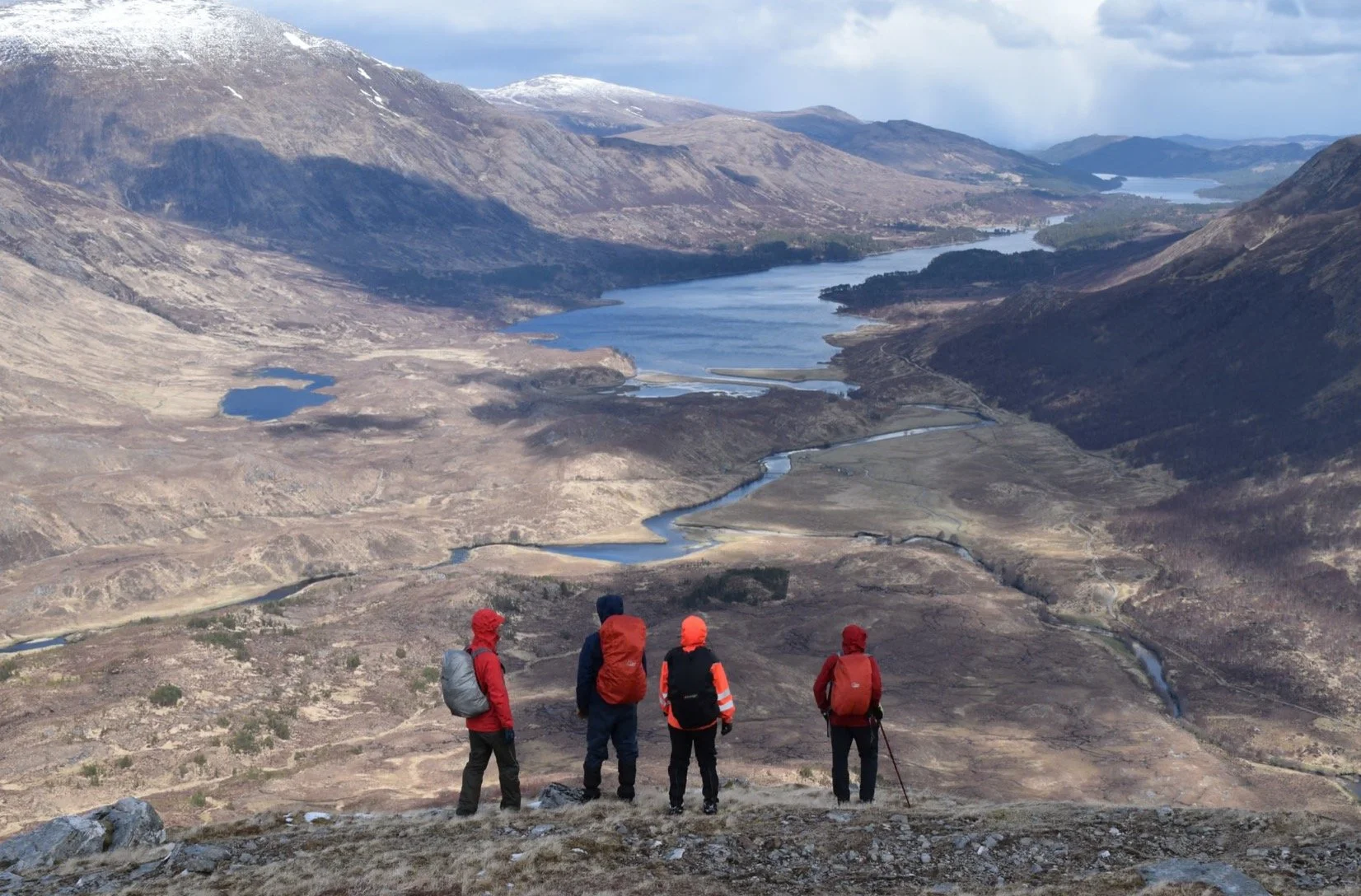
Autumn Blues - Glen Affric // ©Paul J Howell 2021
Shortly after I moved to North East Scotland in 2016 I was exploring the local environs, looking to connect with communities around the Cairngorms.
One Friday evening I made my way to Nethy Bridge to attend a keynote presentation being given by Scotland: The Big Picture.
It was excellent and resonated with me strongly - Incredible images and salient points about landscape and culture. Overall it conjured a deep sense of engagement in a packed community hall with over 200 people. However, the Q&A that followed was a car crash, with the panel of conservation, land management and research experts and academics lined up to answer questions.
Anyone who’s sat on such a panel will know that this often dubious scenario becomes the mechanism for all kinds of social, political and personal power asymmetries to take the stage and act out. The audience will naturally respond or react not merely to the presentation's content but more often to the unspoken undertones - the perceived prejudices, assumptions etc. also communicated - intentionally or otherwise.
I’d have been surprised if there had not been sparks given the subject matter, the diverse audience and the sometimes overly charged and often biased use of language. After all, if you host the party, you get to choose the music, although you don’t get to tell your guests how to dance - especially if you’ve chosen to host your party in a foreign country.
On this occasion, the audience included the local farmers, stalkers, and estate managers - hard grafting, fiercely independent, practical people, who live and breath a life attuned to the immediate needs of their animals, crops and families - deeply rooted in the landscape over many decades and enmeshed within complex layers of family lineages, ancestors and customs, each with specific political, financial and regional community affiliations.
As with any local collective, there are unspoken rules, ways and means, feuds and foibles. These dynamics are the threads of connection and relationship that weave the fabric that we might respectfully call ‘the local way of life’ together. If people know it and can play by the rules they generally feel secure enough to go with it for better or worse. Over time these people become carriers of the local culture - the foundations of a people’s identity. ‘It works - don’t mess’, is often the general tone. In this context, any innovation is only as good as its ability to make the existing way of life easier as defined by some important pre-existing local measure of success.
At the other end of this spectrum (not a straight line of course, more a disparate spread of many permutations) were the incomers - those who’d studied ecology, biology, socioeconomics, species reintroductions, forestry management etc. far away in academic institutions and who’d come to the area to change the world, to rewild, save the planet, to retire and live closer to nature, who’d inherited a chunk of something, or to indulge their heroic aspirations of bringing their intellectual prowess, money and connections to improve things - grow the economy, transform the land etc. etc. I was one of these, kind of.
“I work in an arena where emotions run deep and often can become highly charged. Conflicts are common and often held beneath the surface, where they bubble away and sabotage meaningful dialogue and progress.
Promoting change, the main aspect of my work is routinely frustrated by deeply entrenched and complex differences between stakeholder groups. Bridging the divides between them was always extremely slow and difficult going.
I think of Paul as a navigator for these challenging human landscapes, where values collide and where change might be necessary but is rarely wanted. He showed me how to find common causes with those I’d previously seen as being ‘the problem on the other side’.
He didn’t hand me any answers but made me reflect and consider the blind spots and assumptions driving my own attitudes and behaviours, which I now see were sometimes counterproductive to achieving my own outcomes.
After 20 years in my profession, working for the government and, more recently, for NGOs, I realised that my personal commitment and scientific approach alone were not getting me where I felt it was necessary to go, especially against a background of increasing urgency.
Paul’s skill and experience helped me genuinely understand others’ worldviews and map out ways of forming sincere collaborative relationships with people who would have given me a wide and wary berth. As a result, my work has opened new dimensions of possibility.
I now have the tried and tested skills and insight that enable me to form new, unusual and therefore powerful alliances beyond any I previously imagined, which leaves me with a sense of optimism and adventure toward the future.”
The ground between these two paradigms of social and cultural thought and function is where I find life most exciting, interesting and hopeful - the meeting of minds, and navigating the edges of understanding and appreciation. It’s where new ideas are born, where Life is most present - in the messy mix, just before the storm clears and the horizon opens up.
Sat a couple of rows back from the front (in the UK, when there is the slightest potential for conflict at a community event people generally fill from the back, which means you can arrive late and get a front-row seat!) I was pleased to feel the heat.
It was clear the expert panel were sincere. Though not 100% naive idealists, they were still very ‘green’ around the gills in this context and didn’t know how to hold or respond to most of the questions politely hurled in their direction - a game of awkward smiles and pass the hot potato ensued.
It affirmed to me this place had a pulse and was engaged. The experience gave me a good sense of what I sometimes think of as ‘the temperature in the room’. Too cold and you can’t cook anything - none of the ingredients are transformed into edible, nourishing fare. Too hot - everything burns.
This room felt like the oven was preheating while the ingredients were being gathered and prepared nearby.
My question was ‘What happens next?’
At the end of the main event, I approached Pete Cairns, the presenter. He was chatting to a rather animated gentleman in a situation I imagined might go on for a while. I apologised for interrupting and introduced myself by name. I thanked him for sharing his incredible images in such a powerful way and offered him my card as I smiled and told him plainly that I could help him connect with his audiences more effectively.
I was interested not in the what, but the how. Perhaps he might like to call me for a chat?
I was there for less than a minute and left - my bones returning to shape after his ninja handshake.
He did call, and not long after I’d finished finessing the language of his keynote; not to blunt or soften it, but sharpen and clarify the messages with more respect for the dynamic context in which this conversation was taking place. I presented my version to his colleagues and soon after he kindly handed my details to his associates at Trees or Life.
This is where it gets interesting…the three projects I worked on with Trees for Life were some of the most complex scenarios I have encountered, and for good reason.
I have important stories to share about my work with them, what I learned and what I contributed, but this article in the Guardian and the work it took to get to this point not only marked a significant shift in their approach to what, at the time I would politely call ‘community engagement’, it also confirmed to me the transformational power of listening, and that doing the deep work with just one of two sincere and committed people can and does radically change the trajectory of even the most complex, regressively enmeshed scenarios.
The initiatives, conversations and generative changes that flowed from these interactions are still growing today and will continue to do so in ways far beyond my knowledge - ripples of a Friday night out in Nethy Bridge, and trusting my gut - throwing my pebble into the rewilding pond.
It’s important to remember - when you seek to influence a culture as deeply embedded in a landscape such as the Scottish Highlands, mindful of its turbulent histories, cultures and customs, at some point, you're indirectly encroaching on a people's core sense of identity. Any conversation that wanders into that territory is going to become challenging. In that situation, the skill of listening is a wise person's weapon of choice.
Thanks to Peter Cairns at Scotland: The Big Picture, Steve Mickewright and Alan McDonnell at Trees for Life, and Phoebe Weston at The Guardian.